Loading…

Premier League
Spain claimed their second World Cup title with a 1-0 extra-time victory over Argentina in the 2026 FIFA World Cup final. Substitute Ferran Torres scored the decisive goal in the 106th minute as Spain swept the major individual awards, with Rodri, Unai Simon, and Pau Cubarsi all recognised for their outstanding performances.
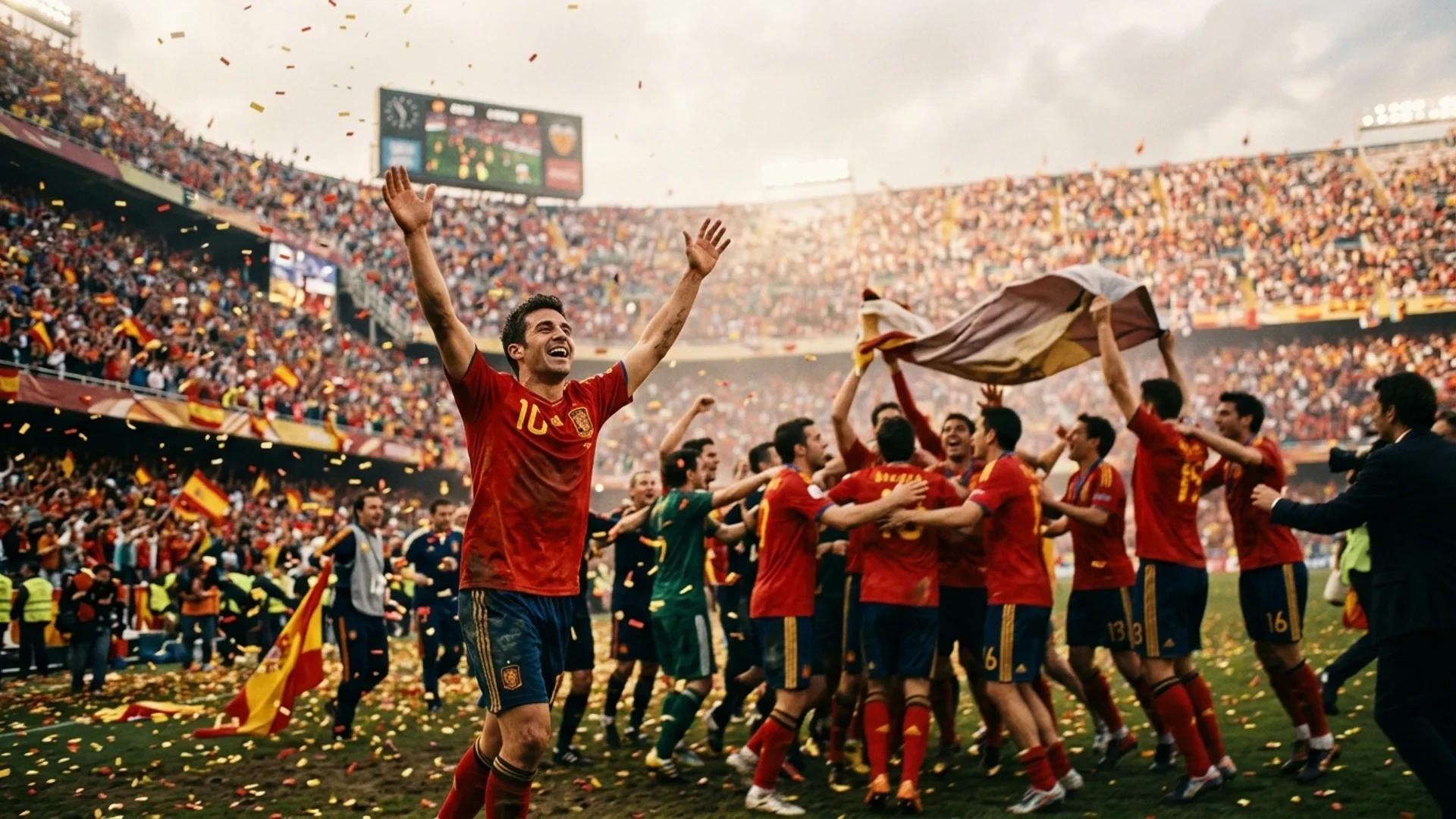
Spain have won the 2026 FIFA World Cup, defeating Argentina 1-0 in extra time to claim their second title in tournament history. Substitute Ferran Torres struck in the 106th minute to seal a triumph that was as much about tactical suffocation as it was about individual brilliance. For anyone who had Argentina as favourites going into this final, the scoreline barely tells the story of just how thoroughly Spain controlled proceedings.
Let's address the elephant in the room. Lionel Messi, widely regarded as the greatest footballer of all time, was a ghost in this final. Minimal involvement, barely a meaningful touch in the opening 15 minutes, and precious little thereafter. Argentina could not register a single shot in the first half. Not one. Spain's defensive structure, anchored by the extraordinary Pau Cubarsi, made sure Messi never found the pockets of space he thrives in. If this was Messi's final World Cup appearance, it ended not with a roar but with a whisper.
The narrative might tempt you to pin Argentina's defeat on Enzo Fernandez's sending-off, a second yellow card for a foul that left La Albiceleste down to ten men heading into extra time. But here's the uncomfortable truth: Spain were already in complete control before that card came out. Argentina were struggling to breathe, let alone create. The red card simply confirmed what the match had been screaming for 90 minutes. Spain were the better team by a considerable distance.
The 27-minute half-time show disrupted the rhythm of the match, but even that interruption couldn't knock Spain off their stride. They came out for the second half with the same relentless pressing and possession dominance that had defined their entire tournament.
When Ferran Torres came off the bench, Spain already had the momentum. What they needed was a finisher. Torres obliged in the 106th minute, converting after a beautifully constructed team move that carved Argentina's depleted backline apart. It was clinical, it was decisive, and it was the kind of moment that defines World Cup legends. Torres may not have started the final, but his contribution will be remembered for decades.
Spain's dominance of this tournament extended well beyond the final whistle. Their players claimed three of the major individual accolades, a clean sweep that underlines just how comprehensively they owned this World Cup.
Rodri won the Golden Ball as the tournament's best player. The midfielder and captain started all eight of Spain's matches, orchestrating everything from the centre of the pitch. He didn't score. He didn't register an assist. He simply controlled every match he played in, a masterclass in the art of midfield authority.
Unai Simon took home the Golden Glove after keeping six clean sheets across the tournament. He became only the second Spanish goalkeeper to win the award, and his performances between the posts were the foundation upon which Spain built their title charge. This is Spain's first World Cup since 2010, and Simon's consistency was a major reason why the 16-year wait is finally over.
Pau Cubarsi, just 19 years old, won the Young Player Award after playing every single minute of the tournament. Spain conceded just one goal across the entire competition. One. Cubarsi was central to that defensive record, reading the game with a maturity that belied his age. Already an Olympic gold medallist with Spain, this was his first major senior tournament, and he performed like a player who has been doing this for years.
Spain's 2026 World Cup victory cements this generation as one of the finest in the nation's history. The Euro 2024 triumph was impressive enough, but adding a World Cup title elevates this squad into legendary territory. With Cubarsi at just 19 and Rodri still in his prime, this team looks built to dominate international football for years to come.
For Argentina, the questions are harder. Messi's influence is waning at the highest level. The squad that won in Qatar in 2022 looks like it has reached its ceiling. Rebuilding around the next generation will be the challenge, and after a final this one-sided, that process cannot start soon enough.
Jon