Loading…

World Cup
Ferran Torres scored the decisive extra-time goal as Spain beat Argentina to claim their second FIFA World Cup title in a tense, tactical final defined by Enzo Fernandez's red card and Luis de la Fuente's masterful substitutions.
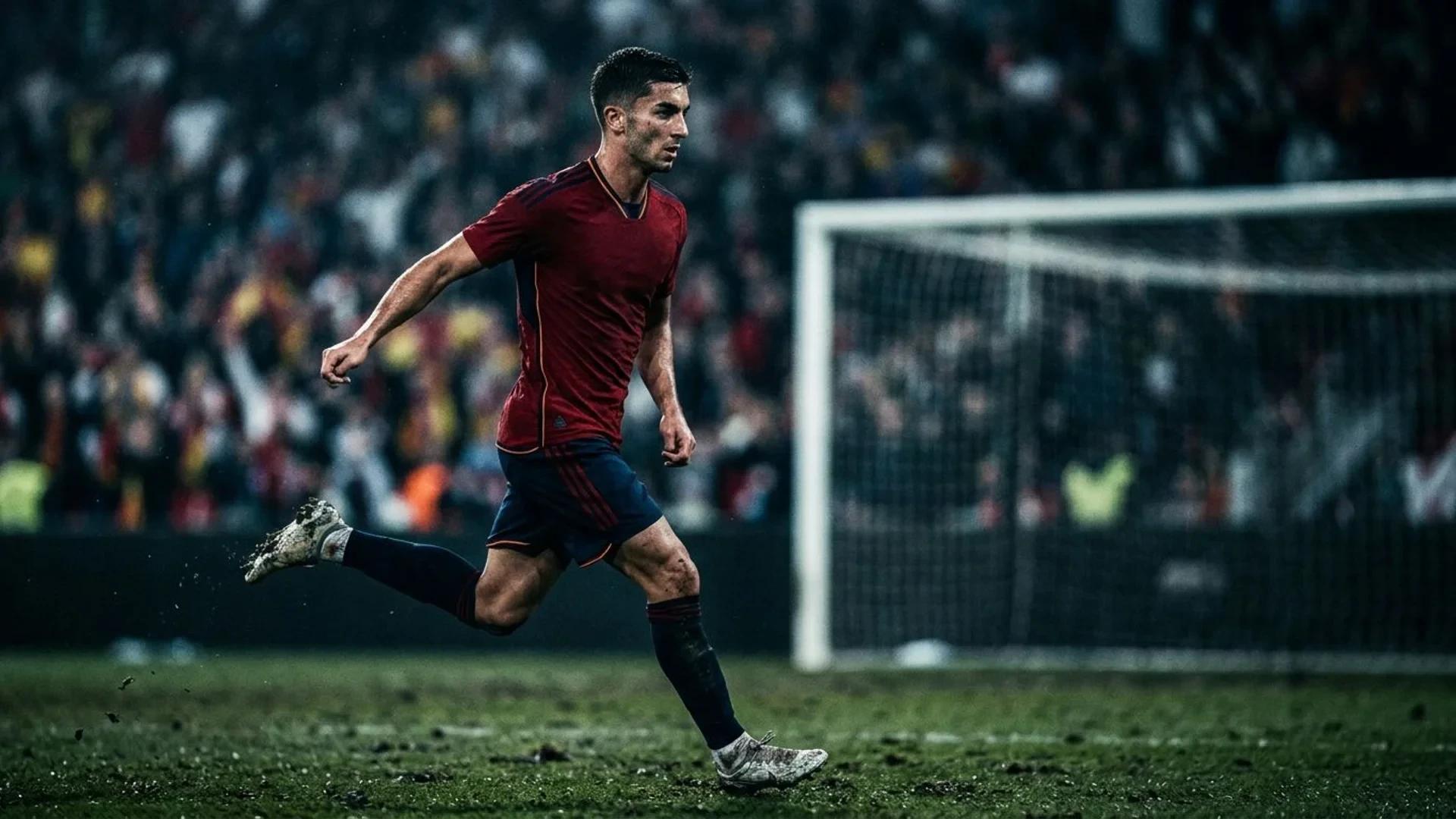
Spain have done it. For only the second time in their history, La Roja are world champions, and they did it the hard way: grinding past Argentina in a tense, tactical World Cup final that needed extra time to produce a winner. Ferran Torres, a substitute who had already squandered opportunities, popped up with the decisive goal to seal Spain's second FIFA World Cup title and extend their remarkable unbeaten run in competitive fixtures under manager Luis de la Fuente.
Let that sink in. Back-to-back major trophies for De la Fuente's side. Euro 2024, and now the 2026 World Cup. Whatever debate existed about this manager's credentials has been emphatically shut down.
There is something beautifully chaotic about the way Torres ended up as the hero. Brought on as a substitute, the Barcelona forward missed a couple of presentable chances before finally burying the one that mattered most. A perfect 10 on the night, not because of clinical finishing across the board, but because of the single moment that rewrote his entire tournament narrative. Torres now sits in the same legendary company as Andres Iniesta, the man who won Spain's first World Cup in 2010. Different style, same ice-cold nerve when it counted.
Argentina's hopes took a devastating blow when Enzo Fernandez was sent off. Pau Cubarsi, the precociously talented young centre-back, drew the foul that led to the dismissal, and whether you think he sold it or earned it, the outcome was the same: Argentina lost one of their most important midfielders at the worst possible time. From that point, the Albiceleste were chasing shadows against a Spanish side that lives and breathes possession.
And yet, going down to ten men was not the only problem for Argentina. Spain's control of the match was suffocating even before the red card. Rodri was magnificent from the middle of the park, dictating tempo and controlling space like only he can. Marc Cucurella dealt with Lionel Messi effectively, cutting off supply lines and adding attacking thrust of his own. Spain had the ball, the territory, and the composure. What they lacked, for 90 frustrating minutes, was a cutting edge.
The biggest pre-match talking point was Luis de la Fuente's decision to leave Pedri on the bench and start Alex Baena on the left wing. It was an awkward fit. Baena linked up neatly enough but simply could not provide the pace or directness Spain needed against a deep Argentine block. The lack of penetration in the first half was directly traceable to this selection call.
De la Fuente course-corrected, though, and that is what separates good managers from great ones. The introduction of Nico Williams off the bench was transformative. Williams brought blistering pace and creativity that Argentina simply could not handle. He was the spark plug Spain desperately needed, and his impact tore the game open. Pedri added attacking intent when he entered as well, finally giving Spain the forward momentum they had been missing.
Lamine Yamal's World Cup final was a story of survival as much as skill. The teenage sensation was lively from the off, and Argentina's response was predictable: they tried to kick him out of the game. Credit to Yamal, he absorbed the punishment, grew into the match, and became a genuine threat in the second half and extra time. At just 19, the kid has already collected a European Championship and a World Cup winner's medal. The future of football, indeed.
For all their dominance, Spain's biggest issue was clear throughout the 90 minutes. They kept the ball beautifully, moved it with purpose, and created half-chances. But nobody wanted to pull the trigger. Dani Olmo was the most emblematic example: right runs, right positions, wrong decisions in the final third. Mikel Oyarzabal managed only 25 touches and a couple of half-hearted shots. Spain were playing keep-ball at times when they needed killer instinct.
Extra time changed everything. With Nico Williams stretching the play and Torres lurking, Spain finally found the breakthrough. Torres' winner was not just a goal; it was a release of 90 minutes of pent-up frustration from a team that knew it was better, but could not prove it on the scoresheet.
Spain's triumph cements De la Fuente's squad as the dominant force in international football. Unbeaten in competitive matches, champions of Europe and now the world, this team has a blend of youth and experience that could sustain them for years. Cubarsi and Yamal are still teenagers. Rodri remains in his prime. The depth on the bench (Williams, Torres, Pedri) would be the envy of any nation.
For Argentina, this is a bitter pill. The Messi era edges closer to its conclusion, and the manner of this defeat (reduced to ten men, outpossessed, outmanoeuvred) raises real questions about what comes next for Lionel Scaloni's side.
For fans looking to get involved in the action around upcoming international fixtures and tournament outcomes, Epicbet offers exciting betting opportunities on the biggest matches and sporting events worldwide.
Christopher