Loading…

Premier League
Enzo Maresca steps into the most daunting job in English football as Manchester City's new manager. With Pep Guardiola gone, a younger squad, the Rodri transfer saga, and 115 Premier League charges looming, the Italian faces a season-defining challenge before a ball is even kicked.
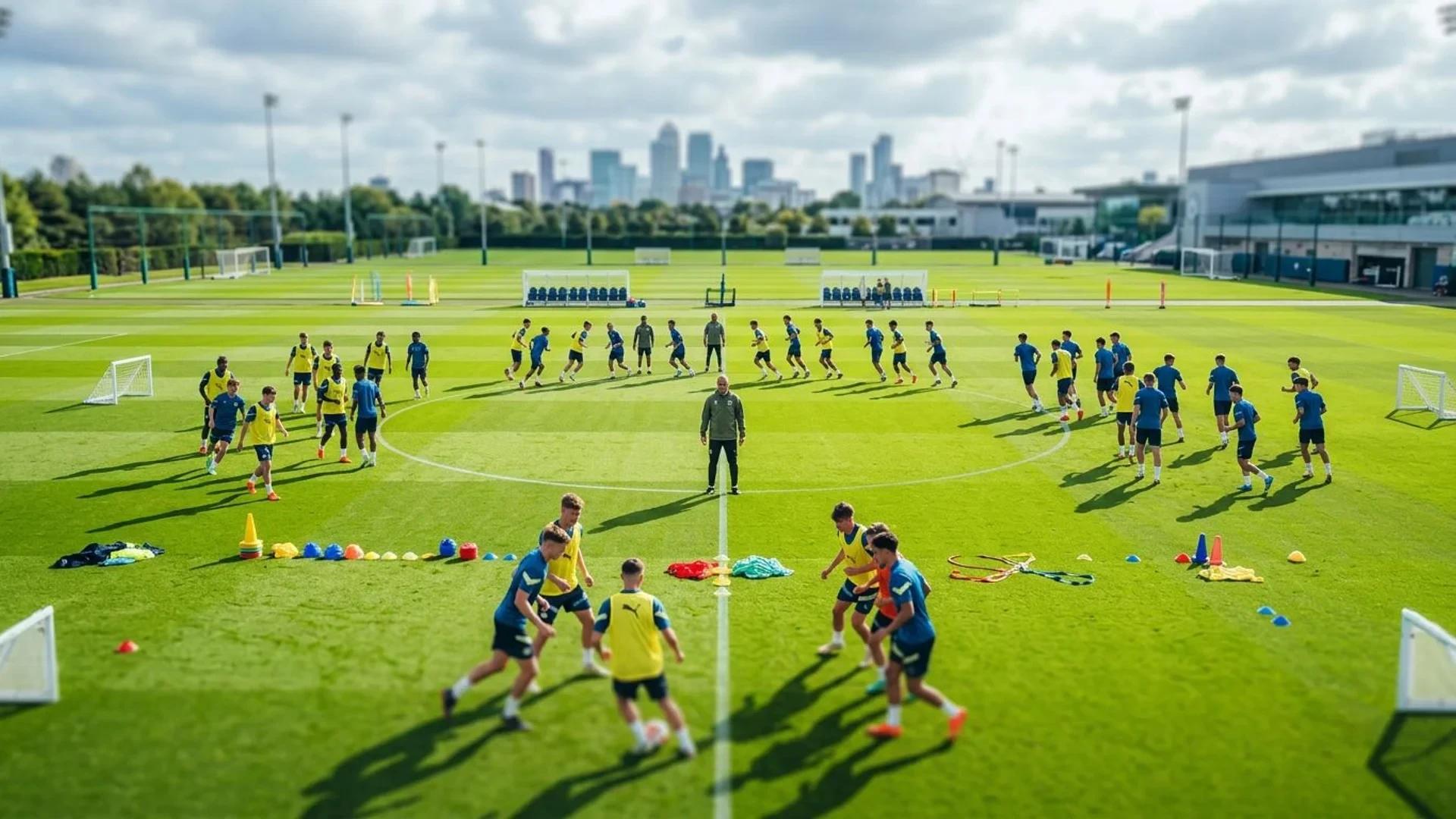
Manchester City have officially stepped into the great unknown. Enzo Maresca, once a trusted lieutenant within the club's coaching structure, is now the man tasked with filling the enormous void left by Pep Guardiola. It is a job that would make most managers break out in a cold sweat, and yet Maresca has walked straight into it with the quiet confidence of someone who knows the inner workings of this machine better than almost anyone on the outside.
But knowing the machine and driving it are two very different things. And the road ahead for Maresca at Manchester City is littered with complications that go far beyond tactics and team sheets.
The fixture gods have offered Maresca a sliver of mercy. His first three Premier League matches pit Manchester City against Bournemouth, Crystal Palace, and Coventry City. On paper, it is about as kind an opening as a new manager at the Etihad could ask for. These are games City should be winning, and winning well. They are the kind of fixtures where Maresca can begin to stamp his identity on the side, build confidence, and buy himself time with a fanbase that has grown accustomed to near-perfection under Guardiola.
But here is where it gets interesting for bettors and fans alike: a new manager, a younger squad, and the psychological hangover of losing the greatest coach in the club's modern history could make those early results anything but routine. The transition factor is real. Do not sleep on it.
Manchester City's squad has undergone a notable shift. The average age has dropped, a clear sign the club is investing in youth and planning for the long haul. New signings have been geared towards reinforcing the squad with emerging talent, and there are still moves to be made, with the club reportedly seeking a right-back and a winger to round out the roster.
That youthful injection brings energy, pace, and potential. But it also brings inexperience, and crucially, a leadership vacuum. The departures of key senior figures have stripped the dressing room of voices that carried weight in the biggest moments. The good news? Rodri and Ruben Dias remain. Those two are the spine, the heartbeat, and the standard-bearers for what Manchester City expect from their players.
And then there is the Rodri situation, which has the potential to define Maresca's entire first season before it even begins. Manchester City have put a new contract on the table for the Ballon d'Or-calibre midfielder, but Rodri's heart reportedly pulls him towards Real Madrid. It is the kind of transfer saga that dominates windows and destabilises squads if left unresolved.
The twist? According to reports, the main obstacle blocking Rodri's dream move is Real Madrid president Florentino Perez himself, who is currently unconvinced about pursuing the Spaniard. For now, that works in Manchester City's favour. But "for now" is doing a lot of heavy lifting in that sentence. If Perez changes his mind, Maresca could lose the most important player in his squad before the season hits full stride.
Beyond the pitch, there is the matter that refuses to go away: the ongoing 115 Premier League charges hanging over Manchester City. For Maresca, it is a cloud that he cannot control but cannot ignore either. Any adverse ruling could reshape the entire landscape of the club, from transfer strategy to league status. It is the kind of existential uncertainty that no coaching badge prepares you for.
Maresca must compartmentalise. He has to keep his players focused, his staff aligned, and his recruitment sharp, all while the club fights a battle in boardrooms and tribunals that could rewrite its recent history.
Here is the bottom line: Enzo Maresca is not walking into a broken club. Manchester City remain one of the most resourced, best-run operations in world football. The talent is there. The infrastructure is elite. But Guardiola was not just a manager; he was a culture, a philosophy, and a gravitational force that held everything together.
Maresca needs to win, but he also needs to entertain. Manchester City supporters have been spoilt by a decade of the most aesthetically pleasing football the Premier League has ever seen. Pragmatism alone will not cut it at the Etihad. The new boss has to deliver results and spectacle, which is a balancing act that has tripped up far more experienced managers than him.
The 2026-27 season is going to be fascinating. Whether Maresca thrives or merely survives could come down to how those first few weeks unfold, whether Rodri stays, and whether the off-pitch storm finally breaks. One thing is certain: the post-Guardiola era at Manchester City will not be boring.
Jon